
Transparent acrylic (PMMA) is widely used for optical components, microfluidic devices, laboratory equipment, and analytical instruments because of its excellent light transmission and clean machined appearance. When these parts are made correctly, PMMA can remain clear enough for visual inspection, optical paths, fluid channels, and display-facing components.
However, engineers often encounter a common issue during production: clear acrylic turns white after CNC machining. The whitening may appear around drilled holes, milled slots, internal channels, polished edges, threaded ports, or areas under clamping pressure. In precision parts, this is not only a cosmetic defect. It can affect optical clarity, sealing confidence, visual inspection, and customer acceptance.
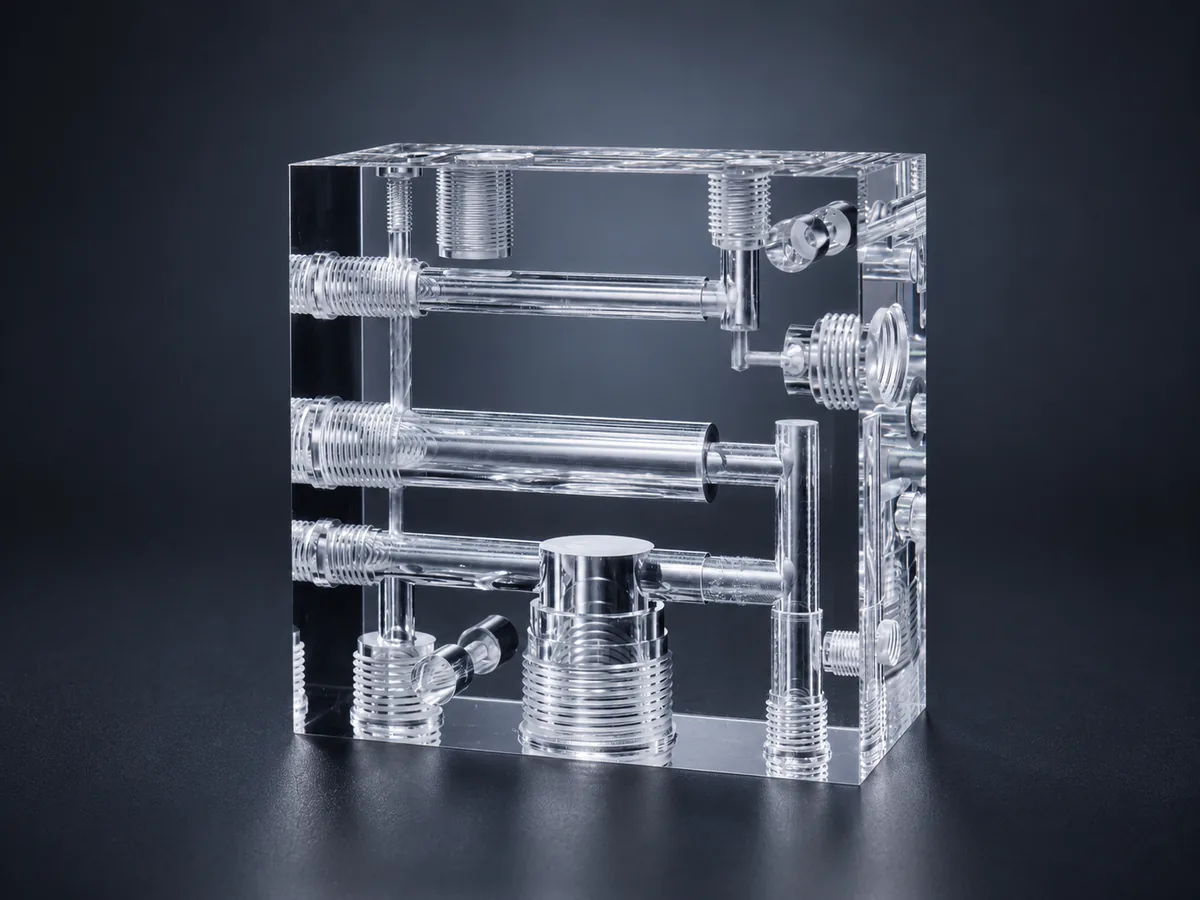
This article explains why acrylic whitening happens after machining, how to reduce the risk, and what engineers should consider when designing transparent PMMA components. For drawing-based transparent components, see PMMA CNC machining services and microfluidic components manufacturing.
What Is Acrylic Stress Whitening?
Acrylic whitening is the cloudy, white, hazy, or frosted appearance that may appear after cutting, drilling, milling, tapping, polishing, or bonding PMMA. It can be surface-level, where the whiteness is caused by tool marks or micro-chipping, or internal, where stress inside the material changes how light passes through the part. Fine crazing may also appear when residual stress and machining heat are not controlled.
In transparent components, even small defects become visible because the material acts like a lens. A hole edge, internal bore, or polished flow channel may look acceptable in normal lighting, but whitening can become obvious under inspection lamps, fluid testing, or optical measurement.
Why Does Acrylic Turn White After CNC Machining?
Engineer?s Note: White Marks Are Usually Internal Stress, Not Surface Contamination
Many engineers initially assume acrylic whitening is caused by dust, chips, or machining residue.
However, white haze after CNC machining is usually related to internal stress, micro-cracking, and residual stress generated during machining.
Surface cleaning cannot remove this type of whitening because the damage occurs inside the material structure.
Preventing acrylic whitening requires controlling:
- Cutting temperature
- Tool sharpness
- Feed rate and cutting parameters
- Cooling method
- Stress-relief annealing process
- Final polishing method
The main causes usually come from a combination of material stress, cutting heat, tooling condition, chip evacuation, and fixturing pressure. The following points are the most common issues to review before machining clear PMMA parts.
Main Causes of PMMA Whitening
Excessive Cutting Force and Improper Machining Parameters
PMMA is rigid but sensitive to stress. If feed rate, spindle speed, depth of cut, or tool engagement is not controlled properly, cutting force can create microscopic cracks or internal stress around the machined feature. These stressed zones scatter light and appear white or cloudy.
Small holes, thin walls, narrow slots, internal channels, and threaded ports are especially sensitive. A part may pass dimensional inspection but still fail optical or visual requirements because stress marks remain around the machined area.
Incorrect Tool Selection and Tool Wear
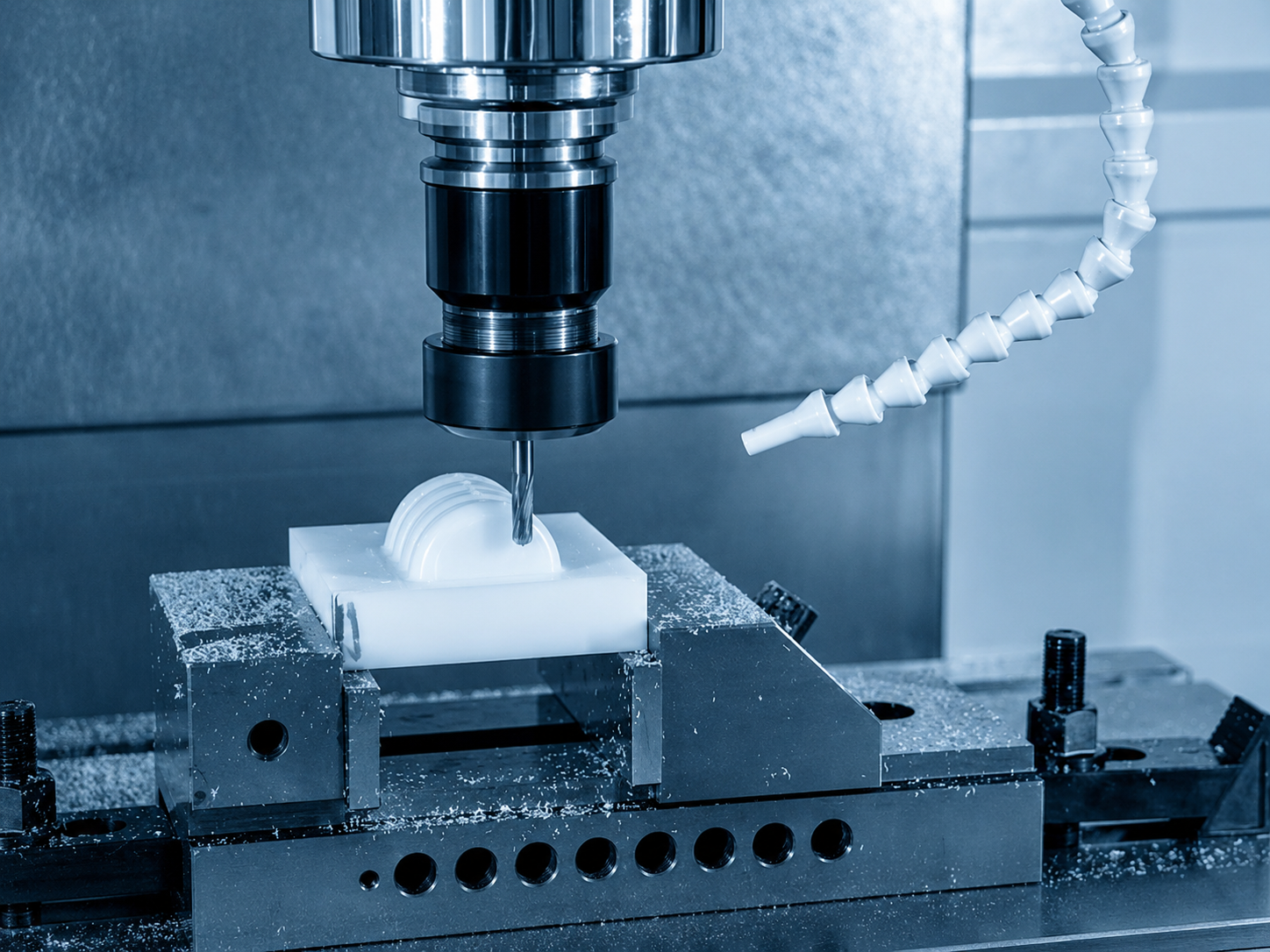
A dull cutter, unsuitable drill, incorrect rake angle, or poor flute geometry can scrape and tear acrylic instead of cutting it cleanly. This may cause white edges, burrs, chipped corners, or rough internal surfaces.
For transparent acrylic components, sharp carbide tooling, acrylic-suitable drills, polished flutes, and controlled tool runout are important. Tool wear should be monitored carefully because a slightly dull tool can quickly turn a clear edge into a frosted edge.
Heat Accumulation During CNC Machining
PMMA has relatively low thermal conductivity compared with metals. Typical PMMA thermal conductivity is approximately 0.18?0.25 W/m?K, depending on grade and testing conditions. Cutting heat generated during machining does not dissipate quickly, so the cutting area can soften, smear, or develop thermal stress.
Heat-related whitening often appears near deep holes, internal pockets, or long tool paths where chips are not cleared efficiently. In some cases, the surface may look melted or cloudy rather than cleanly machined.
Residual Stress in Acrylic Material
Acrylic sheet or rod can contain residual stress from casting, extrusion, cooling, or previous processing. CNC machining removes material and changes the stress balance inside the part. If the material already contains high internal stress, machining may release that stress and create whitening, cracking, or distortion.
Cast Acrylic vs Extruded Acrylic
Cast acrylic is generally preferred for precision CNC machined transparent components because it is often more stable and more suitable for polishing. Extruded acrylic can be useful for some applications, but it may have higher internal stress and can be more sensitive to heat and machining load.
The best choice still depends on part geometry, optical requirement, tolerance, bonding method, and operating environment. For critical transparent components, material selection should be reviewed before machining.
Excessive Clamping Stress
Clamping is another common cause of whitening. If acrylic is held too tightly, especially on thin sections or near transparent faces, local pressure can create stress marks. These marks may not appear immediately but can become visible after machining, polishing, cleaning, or assembly.
How to Prevent Acrylic Whitening During CNC Machining
Optimize Cutting Parameters
Cutting parameters should be selected to reduce heat, vibration, and cutting force. Instead of using aggressive metal-machining habits, PMMA machining usually benefits from controlled depth of cut, sharp tools, proper spindle speed, stable feed, and clean chip removal.
For features such as micro channels, clear bores, threaded ports, and thin walls, the machining strategy should be reviewed before production. Sometimes a small change in tool path, step-down, or finishing pass can make a significant difference in clarity.
Use Proper Acrylic Machining Tools
Tooling for PMMA should cut cleanly instead of rubbing. Sharp carbide cutters, acrylic-suitable drills, polished flutes, and controlled tool runout help reduce chipping and stress whitening. Tool geometry matters more for transparent parts than for many opaque plastics because edge defects are easier to see.
Control Heat and Chip Removal
Heat control is essential. Dry air, vacuum extraction, proper chip clearance, and suitable machining passes help prevent melting and thermal stress. Chips should not remain trapped in narrow channels or deep pockets because they can create friction, heat, and surface damage.
Stress Relief Annealing
For some PMMA blanks or demanding transparent parts, stress relief annealing may be reviewed before or after machining. The actual temperature, holding time, and cooling process should depend on material grade, part thickness, and optical requirements.
Select the Right Acrylic Material Before Machining
For optical or fluidic PMMA parts, material choice should be discussed before machining begins. Cast optical-grade PMMA is often preferred for transparent parts, but grade selection should be matched to application requirements such as clarity, polishing, bonding, chemical exposure, and dimensional stability. Compare options in the engineering plastic materials hub. For high-temperature or opaque precision parts, engineers may also compare with PEEK machining.
Can White Acrylic Marks Be Repaired?
Surface-Level Whitening
If whitening is only on the surface, it may be improved by mechanical polishing, controlled sanding, edge polishing, or finishing operations. This is common on external edges, flat transparent surfaces, or accessible machined features.
Flame Polishing
Flame polishing can improve edge clarity on some acrylic parts, but it must be used carefully. Excessive heat can add new stress or cause distortion. It is generally not suitable for every precision geometry, especially near tight-tolerance features or bonded surfaces.
Vapor Polishing
Vapor polishing may improve transparency on internal surfaces or complex features, but it must be controlled and validated for the specific application. For fluidic parts, engineers should consider chemical compatibility, dimensional influence, surface condition, and cleaning requirements before choosing this method.
Deep Internal Whitening
If whitening is caused by internal stress or micro-cracking below the surface, repair is often limited. In these cases, prevention during material selection, fixturing, machining, and polishing is more reliable than trying to repair the part after machining.
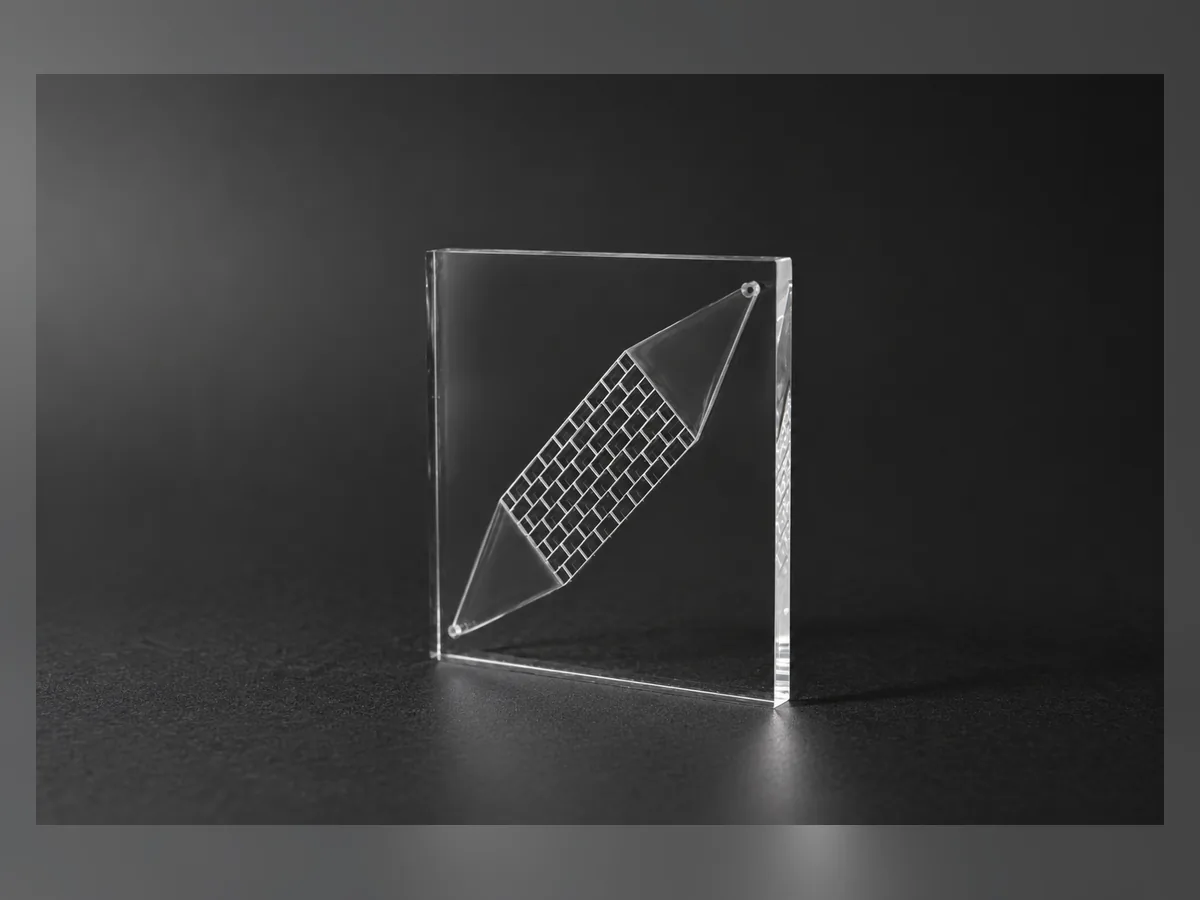
Real Manufacturing Example: Preventing Whitening in Transparent PMMA Components
Application: Transparent PMMA Valve Body for Laboratory Fluid Control
Challenge: White stress marks appeared around drilled holes and internal channels after machining.
Root Cause: High cutting force and insufficient chip evacuation created internal stress.
Solution:
- Cast optical-grade PMMA
- Sharp carbide tooling
- Optimized cutting parameters
- Controlled clamping force
- Optical polishing
Result: Maintained optical clarity after machining.
Why PMMA Machining Requires More Than Just CNC Capability
Machining acrylic is not only a question of whether a CNC machine can cut the material. Transparent PMMA parts require a combination of material understanding, tool selection, fixture design, machining parameters, polishing process, and inspection standards.
A part can be dimensionally correct but still unacceptable if it contains haze, stress marks, internal scratches, burrs, or cloudy channels. This is why optical components, microfluidic parts, transparent valve bodies, and laboratory inspection parts should be reviewed from both machining and application perspectives.
Micrylix Precision PMMA Machining Capability
Micrylix manufactures drawing-based PMMA and acrylic components for laboratory equipment, medical devices, microfluidic systems, optical fixtures, and research instruments. We review part geometry, hole features, internal channels, sealing surfaces, transparency requirements, polishing needs, and tolerance zones before quotation.
For custom transparent acrylic parts, customers can send drawings, 3D files, samples, or application notes. Our team will review machining feasibility and suggest a practical manufacturing approach before production. To start a project, use the Request Quote page.
FAQ
Why does acrylic turn white after CNC machining?
Acrylic can turn white because of cutting stress, heat accumulation, dull tools, poor chip evacuation, residual material stress, or excessive clamping pressure.
Can acrylic whitening be removed?
Surface-level whitening may be improved by polishing or finishing. Deep internal whitening caused by stress or micro-cracks is difficult to repair reliably.
Is cast acrylic better than extruded acrylic for CNC machining?
Cast acrylic is often preferred for precision transparent CNC machined parts because it is usually more stable and more suitable for polishing. Final selection depends on the application.
How can transparent acrylic parts maintain optical clarity after machining?
Use suitable PMMA material, sharp tooling, controlled cutting parameters, stable fixturing, heat control, proper chip removal, and an appropriate polishing process.
Conclusion
Acrylic turns white after CNC machining mainly because of stress, heat, tool condition, material quality, and clamping control. For transparent PMMA parts, prevention is more important than repair. Material selection, machining strategy, tool sharpness, chip removal, polishing, and inspection should be considered before production begins.
For engineers working on transparent PMMA valve bodies, microfluidic components, optical fixtures, or laboratory inspection parts, early review of drawings and application requirements can reduce whitening risk and improve final part clarity.
Need Clear Acrylic Parts Without Whitening Issues?
Send your drawing and machining requirements. Our engineers will review cutting strategy, tool selection, polishing method, and finishing requirements before quotation.