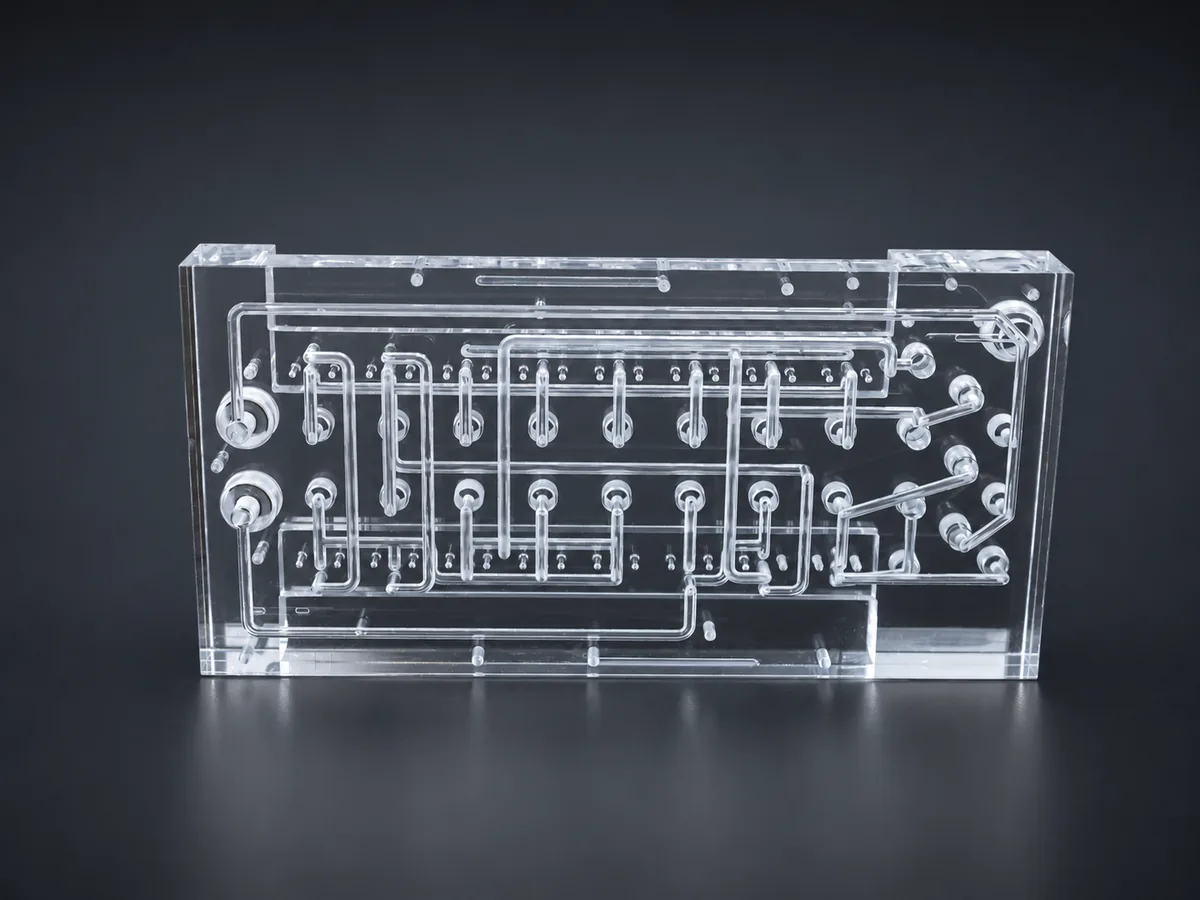
Semiconductor Plastic Parts CNC Machining

Micrylix | Precision Engineering Plastics

Semiconductor Plastic Parts CNC Machining

Precision machined PEEK, PAI / Torlon and engineering plastic components for semiconductor equipment, wafer handling, insulation, and fluid handling assemblies.

PEEK semiconductor partsPAI / TorlonWafer handlingFluid handling
Semiconductor Plastic Parts CNC Machining

Why

Why Engineering Plastics In Semiconductor Equipment

Engineering plastics are selected when metal alternatives cannot meet insulation, weight, chemical, wear, or thermal requirements in sensitive equipment assemblies.

Electrical insulation

PEEK and selected plastics can provide stable insulating behavior in precision assemblies.

Chemical resistance

Material selection can support exposure to process chemicals, cleaning media, or fluid handling environments.

Dimensional stability

Precision machining helps maintain fit, sealing surfaces, and repeatable assembly geometry.

Common

Common Materials

Material selection depends on service temperature, chemical exposure, mechanical load, sliding contact, and dimensional requirements.

PEEK

High-performance plastic for strength, chemical resistance, insulation and high-temperature applications.

Explore Materials

PAI / Torlon

Selected for high-temperature and wear-resistant components where stability matters.

Explore Materials

PMMA / Acrylic

Used when transparency, visual inspection, or optical clarity is required.

Explore Materials

PEEK

PEEK Components

Micrylix machines PEEK components according to customer drawings and application requirements.

Insulators

Precision PEEK insulating components and spacers.

Manifolds

Fluid routing parts with holes, ports and channels.

Fixtures

Machined support and positioning components.

Custom parts

Complex PEEK parts based on STEP files or drawings.

PAI

PAI Components

PAI / Torlon is considered for wear, high-temperature and mechanically loaded components.

Wear parts

Components subject to sliding or contact conditions.

Explore Materials

High-temperature parts

Machined parts for elevated-temperature assemblies.

Precision mechanical parts

Components where dimensional repeatability and material behavior must be controlled.

Wafer

Wafer Handling Components

Semiconductor equipment may require low-weight, non-metallic handling, positioning, or support components.

Handling fixtures

Custom plastic components designed around customer equipment drawings.

Support components

Machined parts for positioning, spacing, insulation and assembly support.

Fluid

Fluid Handling Components

Fluidic parts may require precision holes, channels, sealing surfaces, threaded features, or chemically resistant plastics.

Manifold components

PEEK and engineering plastic manifolds for routing and distribution.

Valve-related parts

Valve bodies, plates, seats, and custom fluid-control components.

Drawing review

Manufacturability review for ports, channels, tolerances and sealing features.

Request Engineering Quote

Why

Why Micrylix

Micrylix focuses on tight-feature CNC machining of engineering plastics for industrial and technical applications.

Engineering plastic expertise

Experience machining PMMA, PEEK, PAI / Torlon and related materials.

Explore Materials

Tolerance control

Drawing review and process planning for precision machined plastic parts.

View Case Study

Custom manufacturing

Prototype and batch production according to customer drawings.

View Case Study

FAQ

FAQ

What plastics are used for semiconductor parts?

PEEK and PAI / Torlon are common choices when high performance, insulation, chemical resistance or wear resistance is required. PMMA can be used for transparent components.

Can you machine PEEK semiconductor parts?

Yes. Micrylix machines custom PEEK components according to drawings, STEP files, tolerance requirements and application details.

Can you support prototype quantities?

Yes. One-piece and small-batch prototype support is available for drawing-based projects.

Do you provide material advice?

Micrylix can review application requirements and discuss material options before quotation.

Send drawings for engineering review

Share material, quantity, tolerance requirements, and application details. Micrylix will review manufacturability and respond with the next quotation step.

Scroll to Top