
Transparent Plastic Machining
Transparent Plastic Machining
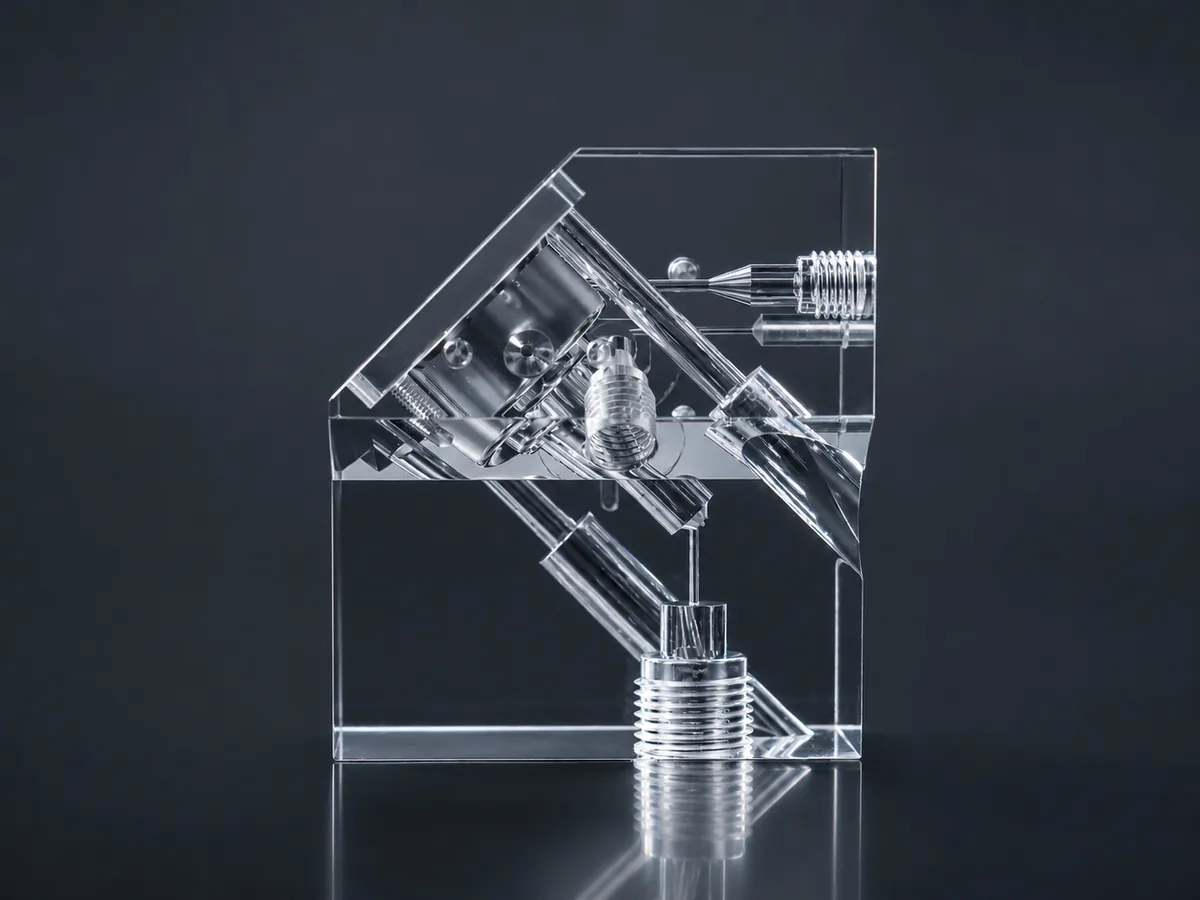
Custom CNC machined transparent PMMA, acrylic and clear plastic components for optical inspection, fluid handling, laboratory equipment, microfluidics and precision engineering applications. For visible fluid paths and PMMA fluid-handling assemblies, Micrylix can also machine transparent plastic manifolds where clarity, burr control, and sealing surfaces need early review.
Machining Reality
Why Transparent Plastic Parts Require Careful CNC Machining
Transparent plastics show machining defects more clearly than opaque plastics. Internal stress, heat buildup, tool marks, burrs, polishing quality, and cleaning method can all affect the final appearance of clear plastic components.
PMMA / acrylic CNC machining is commonly used when transparency, optical inspection, visible fluid flow, and lightweight precision components are required. However, final clarity depends on material grade, part geometry, machining parameters, polishing, and application conditions.
Micrylix reviews drawings before machining to evaluate holes, channels, sealing surfaces, thin walls, and visible inspection areas. The goal is to choose a machining and finishing approach that fits the real function of the part instead of relying on generic “clear plastic” assumptions.
Drawing-Based Components
Typical Transparent Plastic Components
PMMA Valve Bodies
Transparent valve bodies with threaded ports, sealing areas, fluid paths, and visual inspection features.
Transparent Microfluidic Components
Clear PMMA plates, channels, manifolds, and fixtures for controlled fluid routing and inspection.
Optical Inspection Windows
Machined acrylic windows and viewing components where clarity and edge quality are reviewed early.
Clear Acrylic Covers
Protective covers, panels, and enclosure components machined from transparent acrylic materials.
Flow Cell Components
Clear flow cells and fluid-contact parts with holes, channels, and sealing surfaces.
Transparent Manifolds
Distribution components and visible fluid path manifolds manufactured from drawings or CAD models.
Laboratory Instrument Windows
Inspection windows and instrument parts used in laboratory and research equipment.
Custom Drawing-Based Clear Plastic Parts
Prototype and small-batch transparent plastic parts based on drawings, samples, or application notes.
Material Selection
Materials for Transparent Plastic Machining
High transparency and good machinability make PMMA a common choice for visible fluid channels, optical inspection areas, acrylic valve bodies, and laboratory components.
Polycarbonate may be considered when impact behavior is important, but it has different stress, chemical, and machining behavior compared with PMMA.
Some clear materials may be reviewed for specific applications, but selection should be based on grade, chemistry, temperature, and drawing requirements.
Manufacturing Risks
CNC Machining Challenges for Transparent PMMA and Acrylic
Clear acrylic parts need machining choices that control appearance as well as dimensions. Stress whitening, crazing risk, heat buildup, and burrs around holes or channels should be considered before cutting. For more detail, see our guide on why acrylic turns white after CNC machining.
- Stress whitening and crazing risk depend on material stress, cutting load, solvent exposure, and finishing method.
- Heat buildup should be controlled with suitable tooling, feed rate, chip evacuation, and cooling strategy.
- Burrs around holes, ports, channels, and sealing surfaces may need dedicated finishing review.
- Polishing and surface finishing should match the inspection function, not just the cosmetic appearance.
- Aggressive cleaning solvents should be avoided unless compatibility is confirmed for the grade and application.
Related Capabilities
Related Micrylix Capabilities
Micrylix manufactures transparent and precision plastic parts from drawings for fluid handling, inspection, research, diagnostic, and engineering equipment applications.
RFQ
Need Custom Transparent Plastic CNC Parts?
Send your drawings, material requirements, quantity, tolerance requirements, surface finish expectations and application conditions. Micrylix will review manufacturability and recommend a suitable machining and finishing approach.