
Micrylix Case Study
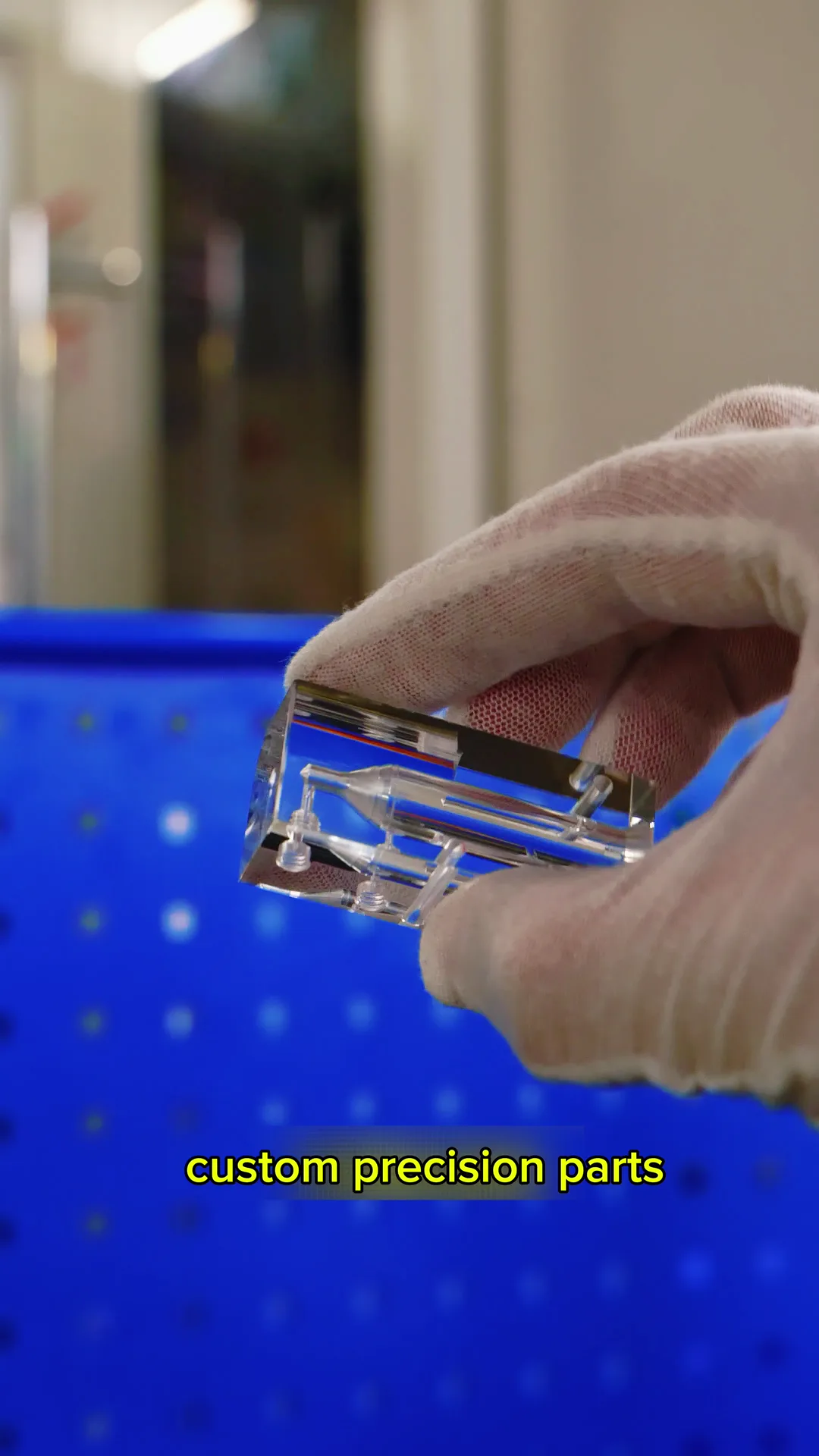
Transparent Acrylic Valve Body CNC Machining Case Study
A real drawing-based transparent acrylic valve body project covering engineering review, machining strategy, 5-axis CNC machining, inspection and final part review.
Project Overview
Drawing-Based Transparent PMMA Valve Body Project
This case study documents a transparent acrylic valve body project where the customer needed visible internal flow paths, clean machined edges and stable geometry after finishing. The part was reviewed from drawing requirements before machining so the fixture strategy, tool access and polishing steps could be planned together instead of treated as separate operations.
The component belongs to the same engineering family as plastic valve bodies, transparent plastic machining projects and PMMA fluid-control parts used in laboratory or instrument assemblies.
Watch the Manufacturing Process
5-Axis CNC Machining and Final Part Review
Manufacturing Workflow
From Drawing Review to Finished Transparent Part
1. Drawing Review
Critical channels, ports, sealing faces and visible surfaces were checked before programming to reduce avoidable machining and finishing risk.
2. Programming and Fixture Planning
Tool access, holding method and part orientation were planned around transparent PMMA geometry and the required visible internal features.
3. 5-Axis CNC Machining
The valve body was machined with attention to chip evacuation, cutting heat, tool sharpness and controlled clamping force.
4. Inspection
Finished geometry, edge quality, channels, threads or port features were reviewed against the drawing and application requirements.
5. Final Part Review
Transparency, burrs, stress marks and handling condition were checked before packaging and shipment.
6. RFQ Feedback
Manufacturing notes from the project can support future custom plastic CNC machined parts with similar features.
Key Machining Challenges
What Made the Part Sensitive to Machine
- Transparent acrylic can show stress whitening, tool marks and heat-related haze more easily than opaque engineering plastics.
- Internal channels and visible flow paths require clean chip evacuation and careful edge control.
- Clamping force must be controlled so the finished part does not distort or show handling marks.
- Final surface quality depends on machining, polishing and inspection working as one process.
Material Selection
Why PMMA / Acrylic Was Selected
PMMA was selected because the application required transparency and visual confirmation of internal features. For components where optical clarity and visible fluid paths matter, PMMA CNC machining can be more suitable than opaque high-performance plastics, provided machining heat and residual stress are controlled.
For projects where channels, manifolds or routing blocks are involved, Micrylix also supports microfluidic components and CNC plastic manifolds.
Inspection and Result
Final Review Focused on Fit, Clarity and Machined Features
The finished transparent valve body was reviewed for machined feature quality, visible internal geometry, edge condition, polishing marks and handling condition. For transparent PMMA parts, the inspection process is not limited to dimensions; clarity, local stress marks and surface condition also influence whether the part is suitable for customer assembly review.
For background on stress whitening control, see why acrylic turns white after CNC machining.
Related Micrylix Capabilities
Related Manufacturing Capabilities
RFQ
Have a Similar Transparent PMMA Valve Body Project?
Send your drawing, material requirements, quantity, tolerance needs and application notes. Micrylix will review machining feasibility, material suitability and finishing requirements before quotation.