
Insulating Components
Custom Plastic Insulators
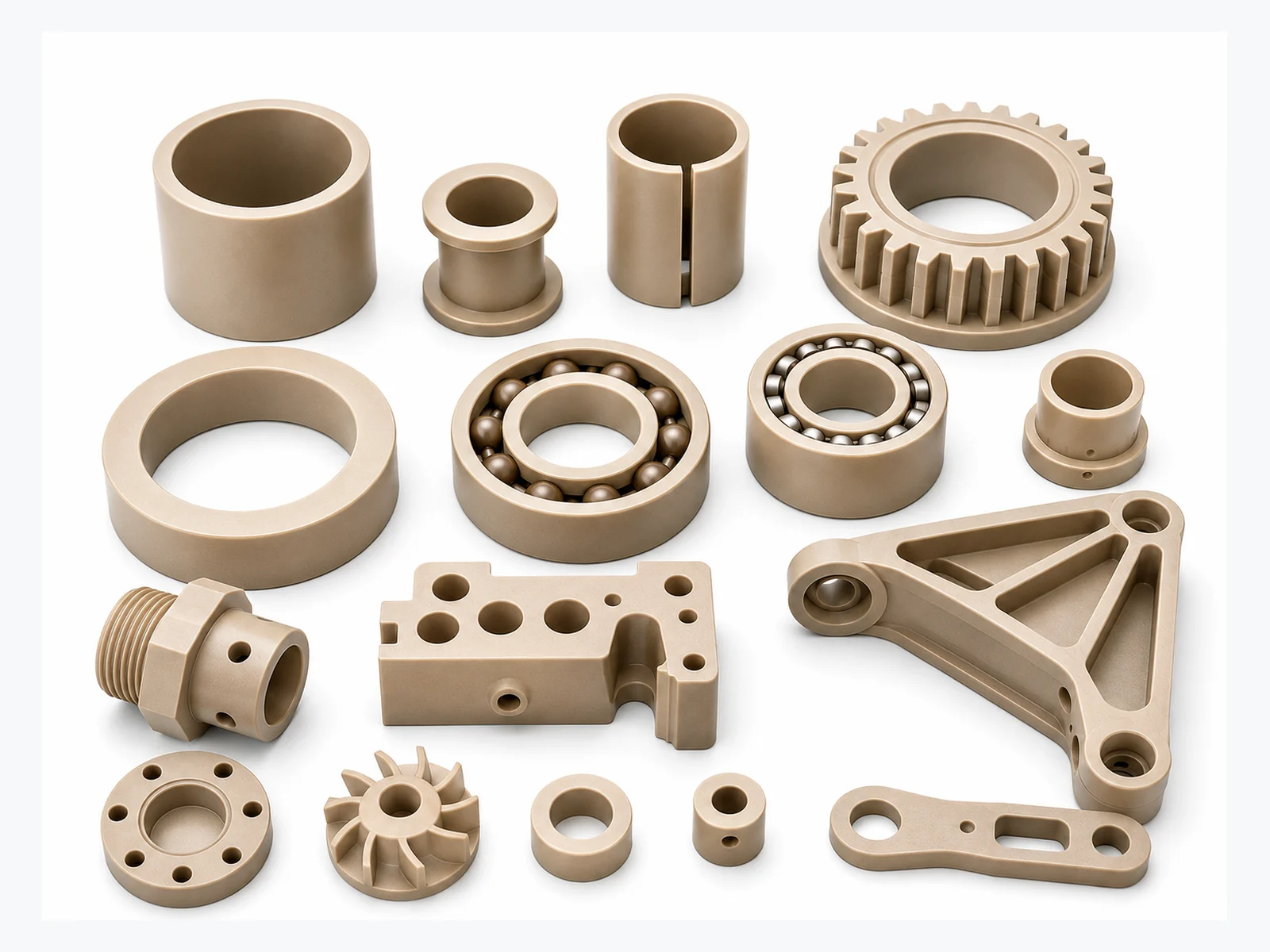
CNC machined insulating components made from PEEK, PEI, PTFE, PPS, POM and other engineering plastics for semiconductor, electronics, automation and laboratory equipment.
Material Behavior
Why Engineering Plastics Are Used for Insulating Components
Engineering plastics are often used for insulating components when a part needs electrical insulation together with mechanical strength, thermal resistance, chemical resistance, lower weight than metal, and design flexibility for custom geometry. CNC machining also allows slots, holes, sleeves, shoulders, threads, and mating features to be produced from customer drawings.
Material selection depends on operating temperature, voltage environment, mechanical load, chemical exposure, dimensional tolerance, and part geometry. For demanding equipment, Micrylix reviews the drawing and working conditions before recommending a suitable material from the engineering plastics material range.
Drawing-Based Parts
Typical Plastic Insulator Components
PEEK Insulating Blocks
Machined blocks, plates, mounts, and supports for equipment requiring strength and insulation.
PEI Electrical Spacers
Custom spacers, standoffs, and locating parts where insulation and heat resistance are reviewed.
PTFE Insulating Sleeves
Sleeves, bushings, and low-friction insulation parts for chemical or sliding-contact areas.
PPS High-Temperature Insulators
Precision insulating components for chemical and elevated-temperature equipment environments.
POM Positioning Fixtures
Cost-effective precision fixtures, guides, and locating parts for equipment assemblies.
Custom Plastic Washers and Bushings
Washers, collars, bushings, and spacers manufactured to drawing requirements.
Sensor Mounting Insulators
Insulating mounts and holders for sensors, probes, instruments, and test equipment.
Drawing-Based Insulating Components
Prototype and small-batch plastic insulation parts based on CAD files, drawings, or samples.
Material Selection
Material Selection for Plastic Insulators
Used when higher temperature resistance, strength, dimensional stability, and precision machining performance are required.
Often reviewed for electrical insulation, heat resistance, and rigid equipment components where the grade fits the application.
Useful for chemical resistance, low friction, sleeves, bushings, and spacers, with tolerance planning based on material behavior.
Selected for chemical and thermal resistance in selected equipment environments where dimensional stability is important.
A practical option for cost-effective precision fixtures, positioning components, guides, and insulating support parts.
Machining Review
CNC Machining Considerations
Plastic insulating components can include thin walls, small holes, threaded features, counterbores, shoulders, and mating surfaces. Machining strategy should consider material movement, burr formation, clamping pressure, and repeatability before production.
- Thin wall deformation and clamping force should be reviewed before machining.
- Burr control is important around holes, slots, pockets, and sleeve features.
- Hole tolerance, thread fit, and counterbore depth should be defined clearly on drawings.
- Sharp corner avoidance and suitable radii can reduce local stress concentration.
- Surface finish and small-batch repeatability should match the assembly requirement.
Applications
Applications for Custom Plastic Insulation Parts
Custom plastic insulators are used across semiconductor equipment, electronics fixtures, automation machinery, laboratory instruments, medical device equipment, and test and measurement systems. The best material and machining plan depend on the working environment and inspection requirements.
RFQ
Need Custom CNC Machined Plastic Insulators?
Send your drawings, material requirements, quantity, tolerance requirements, and working conditions. Micrylix will review manufacturability and recommend suitable engineering plastics for your insulating components.