
CASE STUDY
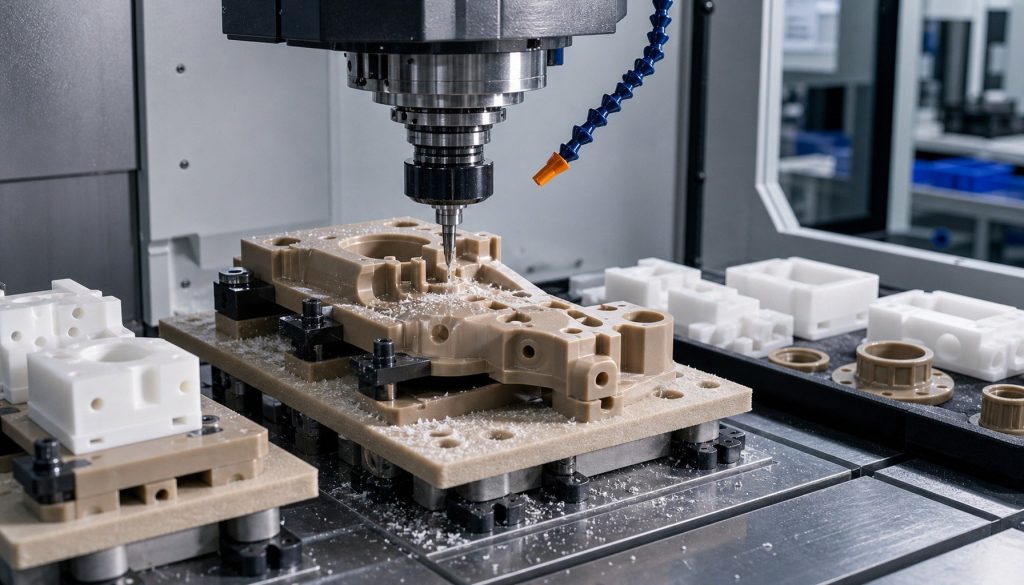
Precision CNC Machining of 3-Channel Microfluidic Degassing Chamber in PPO-GF20
A drawing-based CNC machining project for a matched vacuum degassing chamber assembly used in high-throughput IVD analyzer fluidic modules.
CUSTOMER REQUIREMENT
Matched Degassing Chamber Assembly for Clinical Fluidics
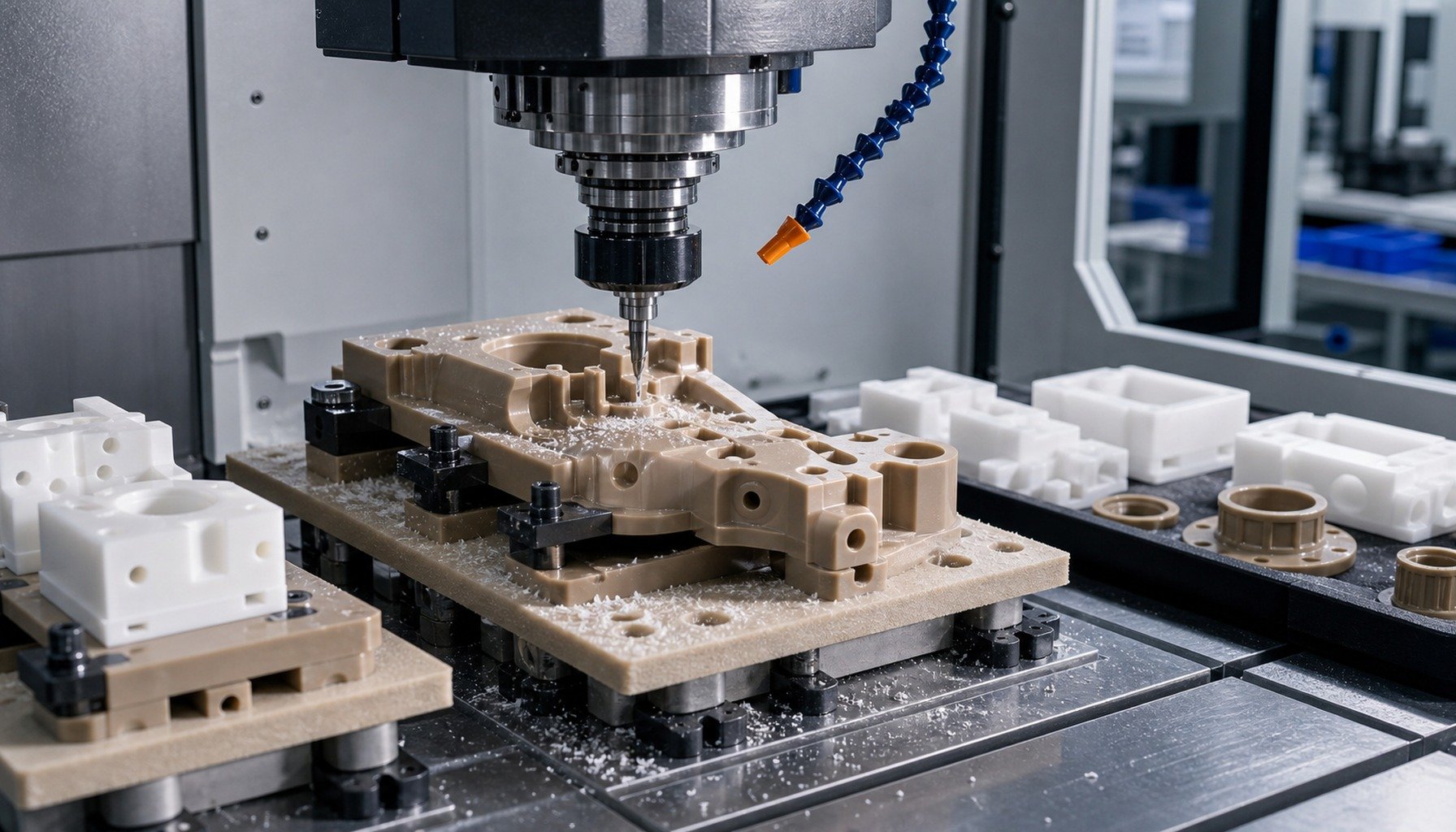
The project required a matched top cover and base body for a next-generation fluidic testing module. Three isolated reagent channels had to run in parallel with a central vacuum degassing path to reduce microbubbles before optical and electrochemical readings.
Key features included multi-step fluid barbs, sealing lands, flow-guide chamfers, micro vacuum vent ports, and coplanar sealing faces designed for stable operation under continuous negative pressure.
ENGINEERING CHALLENGES
Small Fluidic Features, Sealing Faces, and Material Stability
Channel Isolation
Three reagent channels had to remain isolated from each other while sharing an integrated vacuum path.
Coplanarity Control
The top cover and base required stable sealing face flatness to support hermetic membrane sealing.
Glass-Filled Plastic Machining
PPO-GF20 required controlled tooling, cutting strategy, and burr management due to glass fiber reinforcement.
MATERIAL FIT
Why PPO-GF20 Was Reviewed for This Fluidic Module
- Low hygroscopic behavior: water absorption below 0.1% helps maintain critical dimensions in wetted reagent environments.
- Chemical resistance: suitable for laboratory detergents, alcohols, wash buffers, and repeated system flush cycles.
- Rigidity and creep resistance: 20% glass fiber reinforcement improves resistance to bolt-clamping deformation around sealing zones.
- Metal-free fluid path: avoids potential ion leaching concerns in sensitive reagent contact applications.
MANUFACTURING SOLUTION
Drawing-Based Process Control From Stock Preparation to Inspection
Stress Relief Annealing
PPO-GF20 stock sheets were thermally conditioned before machining to reduce residual extrusion stress and later distortion.
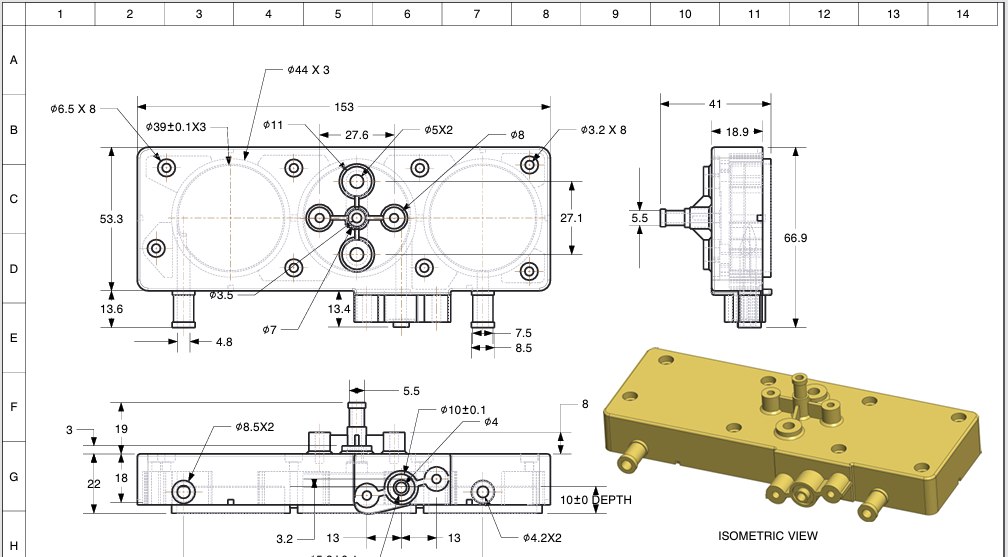
Single-Setup 4-Axis Machining
Rough and finish milling of channels, barbs, and vacuum recesses was completed in one clamping strategy to reduce tolerance stack-up.
PCD Tooling Strategy
Polycrystalline diamond tooling and optimized micro-feed rates helped control fiber abrasion, edge quality, and burr formation.
Sealing Face Finishing
Fine milling controlled the primary sealing faces, with flatness targeted within 0.02 mm for stable membrane contact.
INSPECTION & DOCUMENTATION
CMM Inspection, Cleaning, and Delivery Documentation
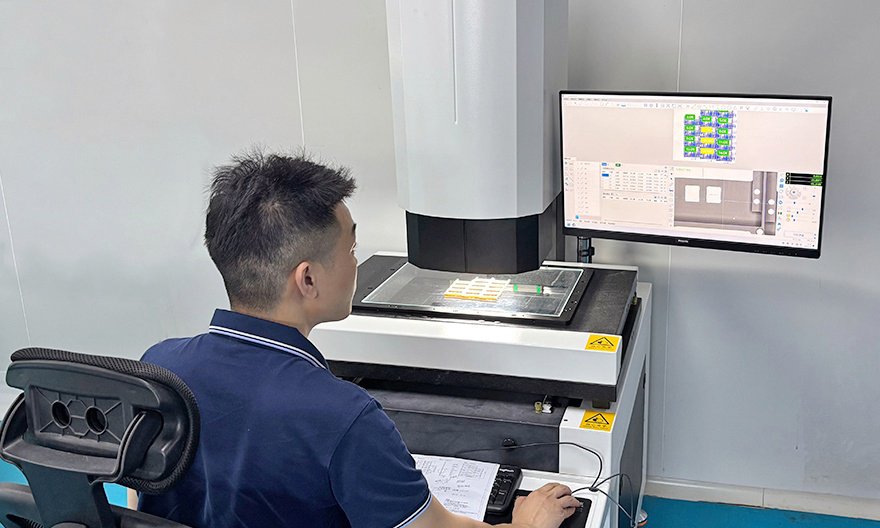
After machining, the parts went through low-temperature ultrasonic cleaning to remove micro-debris from sub-millimeter vent ports and internal features. The batch was inspected against the CAD model and customer drawing requirements before protective packaging.
- Coordinate Measuring Machine (CMM) dimensional inspection
- Critical feature review for ports, channels, sealing zones, and hole locations
- English inspection documentation and batch-specific reports
- Material traceability documentation for medical device quality workflows
ENGINEERING RESULT
Stable Fluidic Geometry and Validated Machining Control
Results are based on the project drawing, inspection records, and customer validation feedback for this specific application.
RFQ
Have a Similar Fluidic or Medical Device Component?
Send your drawing, material requirement, quantity, tolerance needs, and application notes. We will review machining feasibility, material suitability, and inspection requirements before quotation.
STEP / PDF / DWG accepted · NDA available · Prototype and small-batch support