
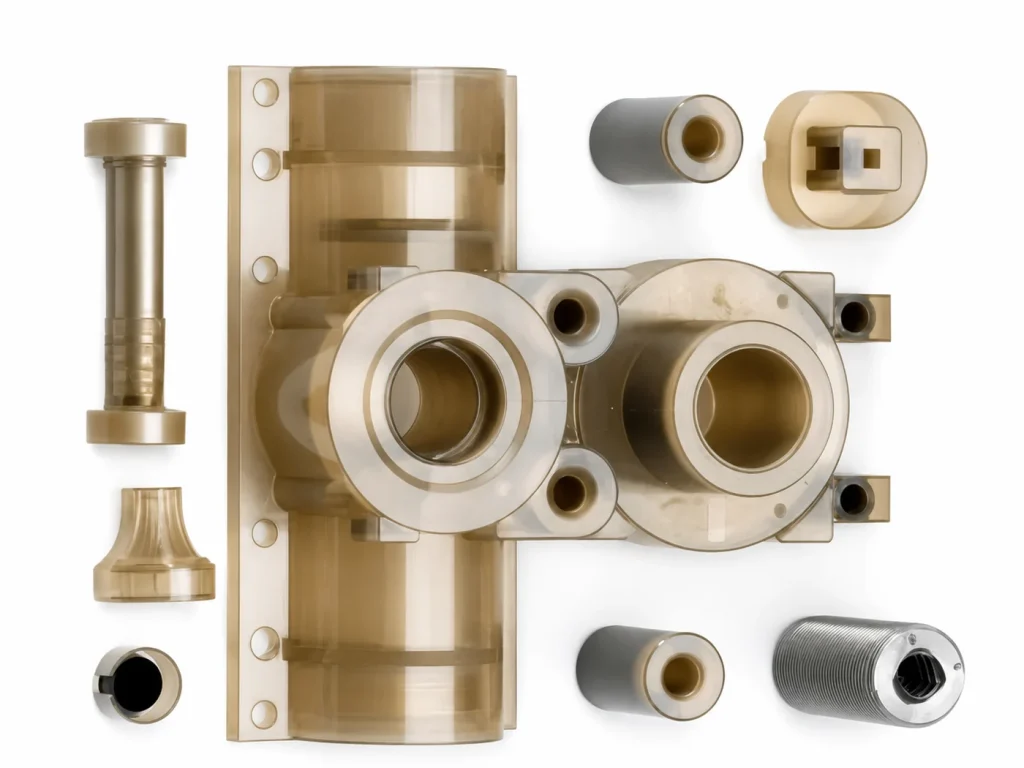
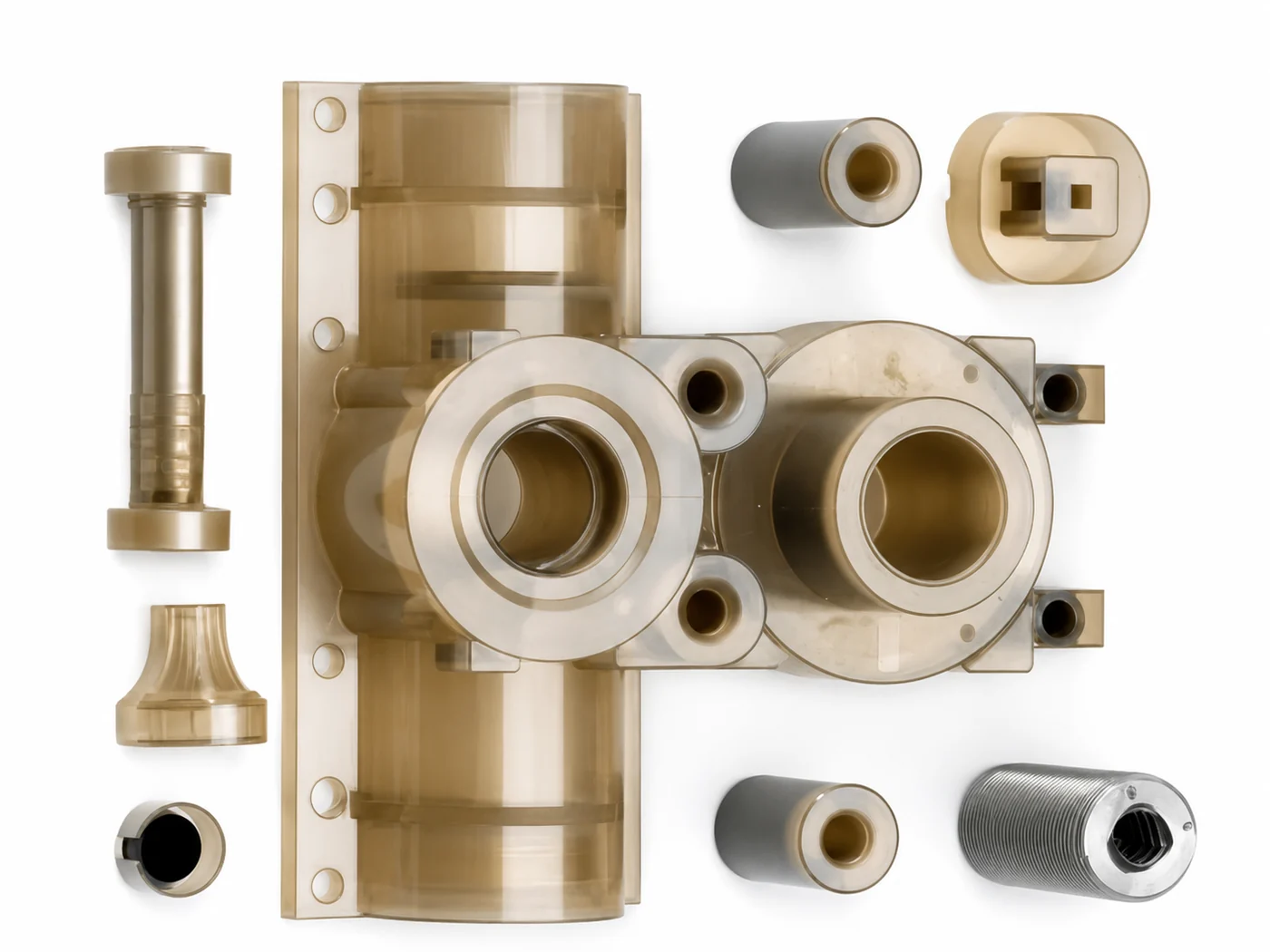
PAI / Torlon Machining
PAI / Torlon CNC Machining Services
PAI CNC machining and Torlon machining for custom high-temperature, wear-resistant, semiconductor, automation, and precision industrial components.
Why PAI / Torlon
Why Choose PAI / Torlon for Precision Components
PAI is selected when dimensional stability, wear resistance, and thermal performance are critical.
PAI, commonly known by the Torlon trade name, is a high-performance engineering plastic used for demanding machined parts where standard plastics may not provide enough strength, temperature resistance, wear resistance, or dimensional stability.
High Temperature Resistance
Suitable for components exposed to elevated operating temperatures.
Wear Resistance
Useful for sliding, contact, guide, and mechanical wear applications.
Dimensional Stability
Supports precision features where movement and deformation must be controlled.
Mechanical Strength
Good strength and stiffness for demanding plastic components.
Chemical Performance
Can be reviewed for selected chemical and industrial environments.
Precision Machinability
Supports drilled, milled, pocketed, and complex custom geometries.
Components
PAI Components We Manufacture
Custom Torlon parts and precision Torlon components machined from drawings, STEP files, and application requirements.
High-Temperature Parts
Machined PAI components for thermal and mechanical operating conditions.
Wear Components
Guides, plates, contact parts, bushings, and wear-resistant components.
Precision Plates
Flat, pocketed, drilled, and micro-featured PAI plates.
Insulators
Electrical and thermal insulation components for technical assemblies.
Custom PAI Parts
Prototype and production parts manufactured to customer drawings.
Capabilities
CNC PAI / Torlon Machining Capabilities
Machining methods adapted to high-performance engineering plastics.
PAI machining requires stable fixturing, controlled cutting parameters, and attention to material stress, heat, and dimensional requirements.
Milling
Flatness, profiles, pockets, and complex features.
Turning
Round PAI components, bushings, sleeves, and shafts.
Drilling
Controlled holes, countersinks, ports, and fastening features.
Threading
Internal and external threads for assemblies and fixtures.
Precision Features
Small details and critical dimensions reviewed before machining.
Complex Geometries
Custom shapes manufactured from 3D files and drawings.
Material Properties
PAI / Torlon Material Properties
Property requirements should be reviewed against the application environment and drawing notes.
| Temperature Performance | PAI is used where elevated temperature resistance is required compared with many standard engineering plastics. |
|---|---|
| Wear Resistance | Selected for sliding, contact, and moving mechanical parts where wear behavior matters. |
| Mechanical Strength | Provides high stiffness and strength for precision machined components. |
| Dimensional Stability | Useful for tight-tolerance parts requiring controlled dimensional behavior. |
| Electrical Properties | Can be used for selected insulating components depending on design and environment. |
Applications
Applications for PAI / Torlon Machined Parts
High-performance plastic components for technical systems and demanding assemblies.
Semiconductor
Insulation, handling, fixture, and equipment-related components.
Aerospace
Lightweight technical components requiring strength and thermal performance.
Automation
Wear parts, guides, and custom mechanical components.
Electronics
Insulating and dimensionally controlled plastic parts.
FAQ
PAI / Torlon Machining FAQ
What is PAI / Torlon?
PAI is polyamide-imide, a high-performance engineering plastic. Torlon is a commonly used trade name for PAI materials.
Why use PAI instead of PEEK?
PAI is often considered when higher wear resistance, strength, or dimensional stability is required. The best choice depends on temperature, load, chemical exposure, and geometry.
Can PAI be CNC machined to tight tolerances?
Yes. Achievable tolerance depends on part size, geometry, material grade, and critical features shown in the drawing.
Do you support prototype quantities?
Yes. Prototype quantities, small batches, and repeat production can be reviewed.
Can you manufacture from STEP files?
Yes. STEP and STP files are accepted. A 2D drawing is recommended when tolerances, threads, finishes, and critical features must be controlled.
Request a Quote
Send Your PAI / Torlon Drawing for Review
Upload drawings, material grade, quantity, tolerance requirements, and application details for engineering review.
