Materials Hub
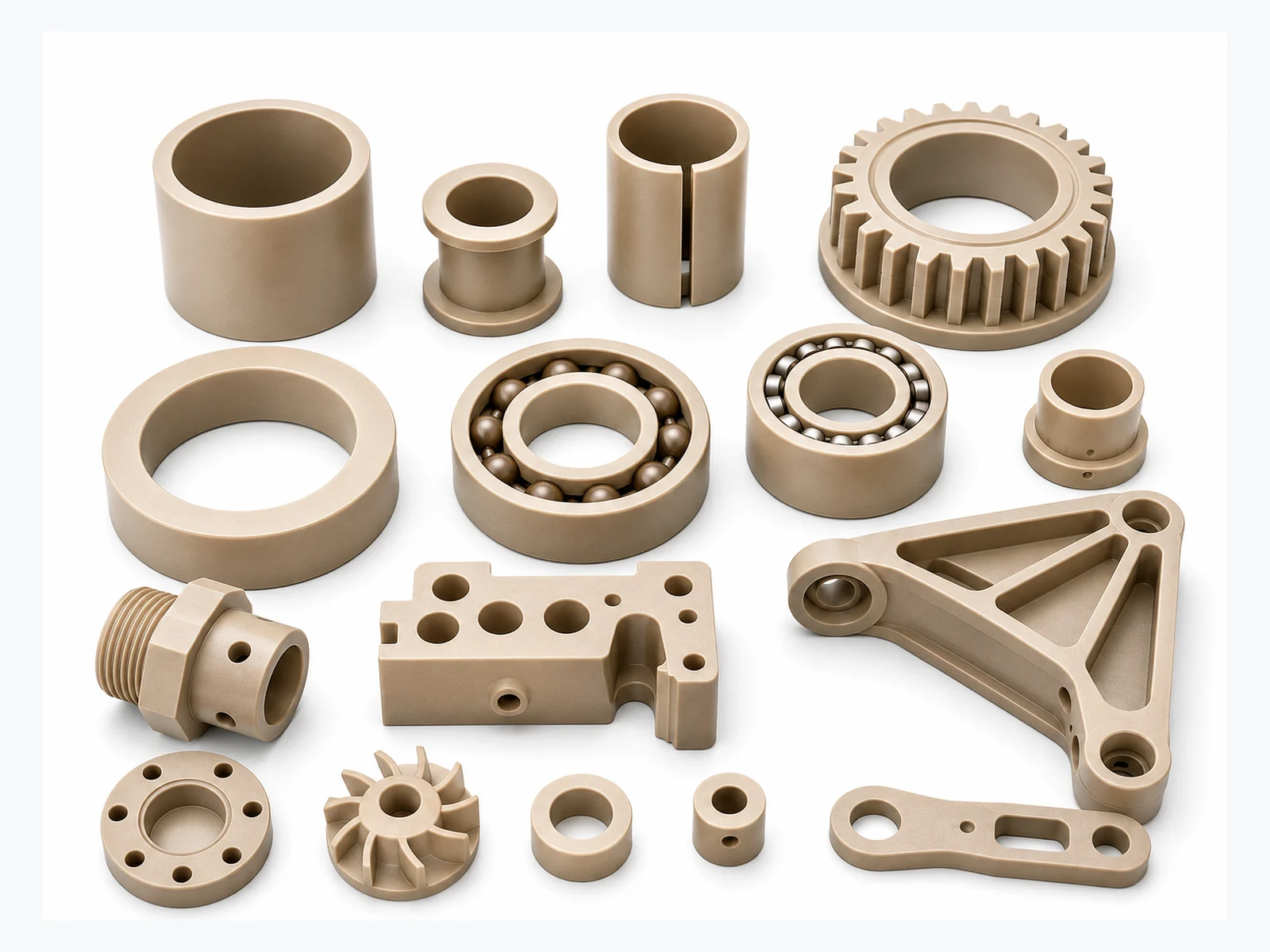
Engineering Plastic Materials for CNC Machining
Explore high-performance engineering plastics used in semiconductor, medical, laboratory, automation, and scientific applications.
Request Engineering QuoteSelection Guide
Material Selection Guide
The selected plastic affects machining strategy, tolerance control, surface quality, and application performance.
Engineering plastics are not interchangeable. Each material has different behavior during machining and different limits in temperature, chemical exposure, dimensional stability, optical clarity, wear, and mechanical loading.
Mechanical Properties
Strength, stiffness, wear behavior, and impact resistance influence part performance.
Temperature Resistance
Thermal stability affects material choice for equipment, fixtures, and process parts.
Chemical Resistance
Material compatibility should be reviewed for solvents, reagents, and cleaning conditions.
Dimensional Stability
Moisture, stress, thermal expansion, and geometry affect long-term accuracy.
Optical Performance
Transparent applications require attention to PMMA, PC, surface finish, and polishing needs.
Machining Feasibility
Feature size, wall thickness, tolerances, and burr control should be checked before production.
Materials
Materials We Machine
A central reference for CNC machined engineering plastic materials.
PMMA / Acrylic
Transparent plastic for optical parts, microfluidic components, manifolds, covers, and laboratory applications.
Optical clarity, transparent fixtures, fluidic channels, laboratory components.
Explore MaterialsPEEK
High-performance engineering plastic with strong thermal, mechanical, and chemical resistance.
Semiconductor parts, medical components, insulation, precision fixtures.
Explore MaterialsPAI / Torlon
Advanced material for high-load, high-temperature, and dimensionally demanding components.
Wear parts, aerospace components, high-stability precision plastic parts.
Explore MaterialsPI
Polyimide material selected for demanding thermal and electrical insulation requirements.
Semiconductor, electronics, insulation, and high-temperature components.
Request Engineering QuotePEI
Engineering plastic with thermal resistance, dimensional stability, and electrical insulation properties.
Medical, laboratory, electrical, and precision device components.
Request Engineering QuotePTFE
Low-friction, chemically resistant fluoropolymer used for seals, guides, and fluid-contact parts.
Chemical handling, sealing, low-friction components, laboratory systems.
Request Engineering QuotePOM
Dimensionally stable engineering plastic with good machinability and low friction.
Guides, fixtures, bushings, automation parts, mechanical components.
Request Engineering QuotePPS
High-temperature, chemically resistant material for industrial and semiconductor applications.
Insulation, process parts, precision components, demanding equipment.
Request Engineering QuotePPSU
Tough, high-performance plastic used where heat resistance and durability are important.
Medical, laboratory, device components, repeated-use parts.
Request Engineering QuotePVDF
Chemically resistant fluoropolymer used for fluid-handling and process-related components.
Fluid handling, chemical systems, laboratory and semiconductor components.
Request Engineering QuoteComparisons
Material Comparison Guides
Compare materials by performance, machining behavior, and application fit.
Applications
Industry Applications
Material selection changes with operating environment and part function.
Semiconductor
PEEK, PTFE, PPS, PVDF, PI, and other materials for process and equipment parts.
Medical
PEEK, PEI, PPSU, PMMA, and other plastics for device and fixture applications.
Laboratory
PMMA, PVDF, PTFE, PEEK, and PEI for instruments, manifolds, and fluidic parts.
Scientific Research
Prototype materials selected for experiment conditions, visibility, stability, and compatibility.
Automation
POM, PEEK, PTFE, and engineering plastics for guides, fixtures, wear parts, and insulation.
FAQ
Material Selection FAQ
How do I choose the right engineering plastic?
Start with the application environment, temperature, chemicals, mechanical load, tolerance needs, and whether transparency or insulation is required.
Can Micrylix recommend a material?
Yes. We can review drawings and application requirements, then suggest suitable materials for CNC machining.
Which materials are suitable for transparent parts?
PMMA / Acrylic is commonly used for transparent machined parts. PC may also be considered depending on strength and optical requirements.
Which materials are used for semiconductor applications?
PEEK, PTFE, PPS, PVDF, PI, and other high-performance plastics are often reviewed for semiconductor-related components.
Do you support prototype quantities?
Yes. Prototype, one-piece, small-batch, and repeat production projects can be reviewed through the RFQ process.
Related Component Applications
Connect material selection with precision plastic component applications.
RFQ
Need Help Selecting a Material?
Send your drawing and application details for engineering review.
Upload PDF, STEP, STP, DWG, or DXF files with material requirements, tolerance needs, quantity, and application notes.